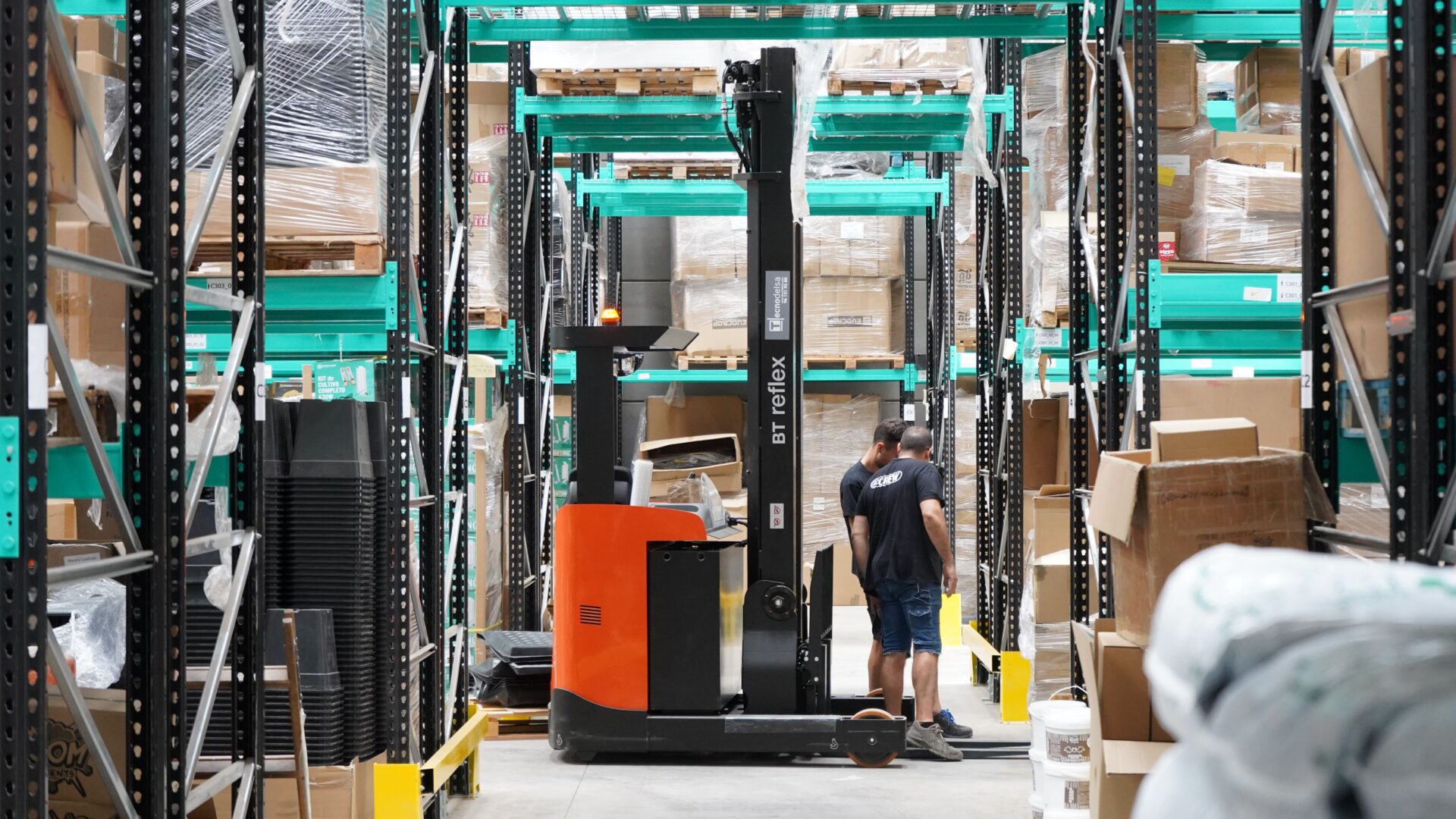
Every warehouse technology vendor has an AI story. The harder question for the IT and operations leaders evaluating those pitches is where to start with AI and automation in warehouses. Wes Coleman, Warehouse Industry Principal at Zebra Technologies, has spent his career answering that question for distribution centers, 3PLs, and manufacturing facilities. His advice on the Frontline Mobility Edge: distinguish between process automation and physical automation. They have fundamentally different cost profiles, risk levels, and payback timelines.
Watch the full episode for the complete discussion.
What Is the Difference Between Process Automation and Physical Automation in a Warehouse?
Process automation augments existing workflows without replacing them. Scan tunnels that read barcodes as boxes pass through, mobile computers with on-device AI that guide workers through picks, voice-directed systems that let workers interact with the WMS hands-free. These technologies integrate into existing operations and begin delivering returns almost immediately because they do not require facility redesign or new infrastructure.
Physical automation replaces workflows. Autonomous mobile robots, conveyor systems, robotic palletizers, automated storage and retrieval systems. These require capital investment, facility modifications, and integration with existing WMS and ERP platforms. Coleman says the ROI timeline for physical automation runs seven to ten years. The total cost of ownership is larger than many companies anticipate.
“There’s been a lot of businesses that have put their toe in the water on really expensive automation projects. I think what they’ve found is the cost of ownership is pretty large,” Coleman says. Companies that went all-in on physical automation are “coming full circle” and recognizing that augmenting human workers with better technology often delivers faster returns than replacing them.
For warehouse IT teams, the practical implication is clear: process automation first, physical automation later. Start where your workers already are, improve the tools they already use. Build a measurable track record before committing to infrastructure-heavy projects.
Prefer to listen? Catch this episode on your favorite podcast app.
Why Does Worker Experience Matter More Than Throughput When Evaluating Technology?
Zebra’s Vision Study found that replacing a warehouse worker costs roughly $6,000. A deeper follow-up study with Oxford Economics put the actual cost at $19,000 per worker when accounting for recruiting, training, productivity ramp, and institutional knowledge loss. In an industry where annual turnover rates regularly exceed 100% at some facilities, that cost compounds rapidly.
Coleman connects worker retention directly to the quality of technology. According to Zebra’s research, companies with outdated or difficult-to-use devices see 30% higher turnover than those with modern equipment. “Workers have great technology at home. They have great technology in their back pocket. A lot of them have great technology in their cars now,” Coleman says. “And ultimately, when they get to work, they expect good technology.“
The evaluation criteria for warehouse technology have shifted as a result. Coleman says buyers are now weighing user acceptance and comfort alongside throughput and productivity metrics. A device that scans faster but frustrates workers or requires weeks of training does not deliver net value if it drives higher turnover.
Voice picking illustrates this shift. Twenty years ago, voice-directed warehousing required a 90-day ramp-up period where workers learned the NATO phonetic alphabet to interact with the system. Today, on-device AI enables natural conversation. Workers speak normally, and the device processes their instructions in real time without cloud latency. Edge AI chips from Qualcomm and MediaTek have made the processing local, which matters in facilities with inconsistent Wi-Fi coverage.
How Should a Warehouse Team Decide Where to Apply AI First?
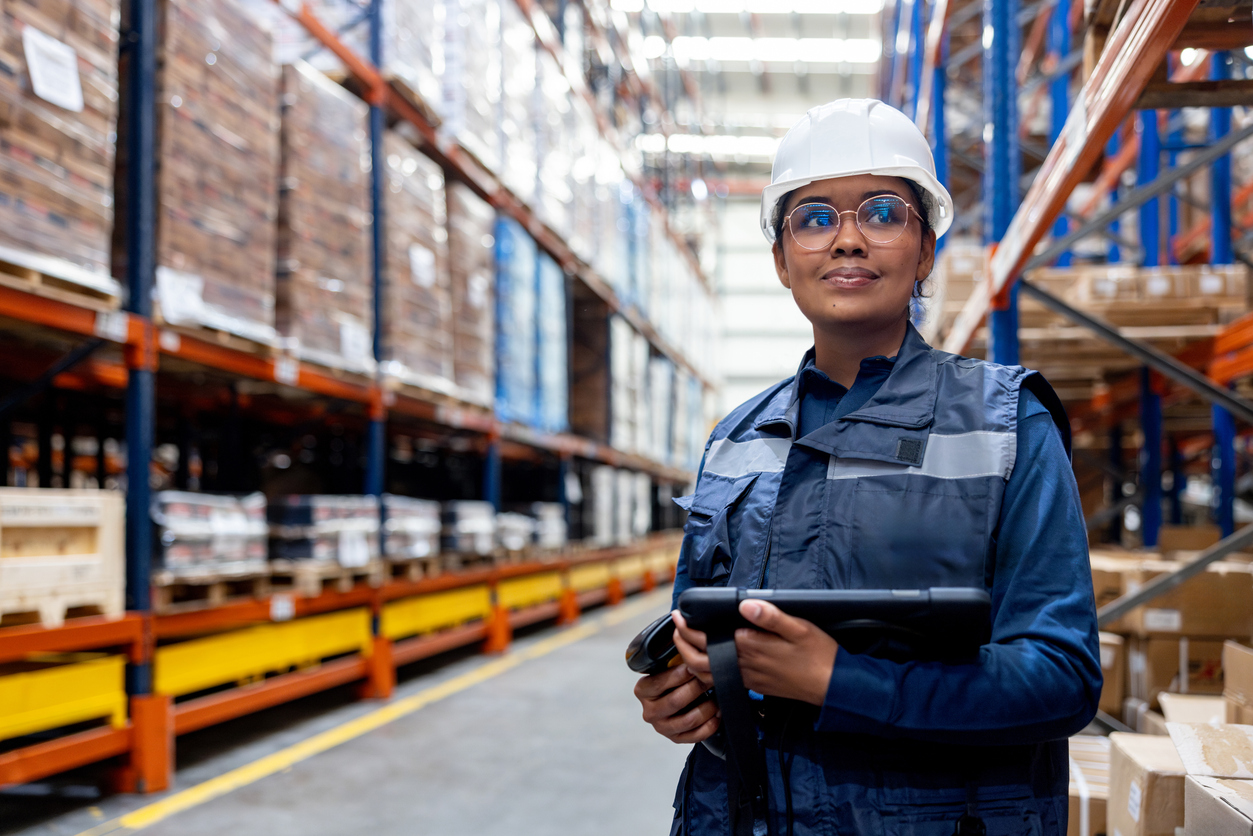
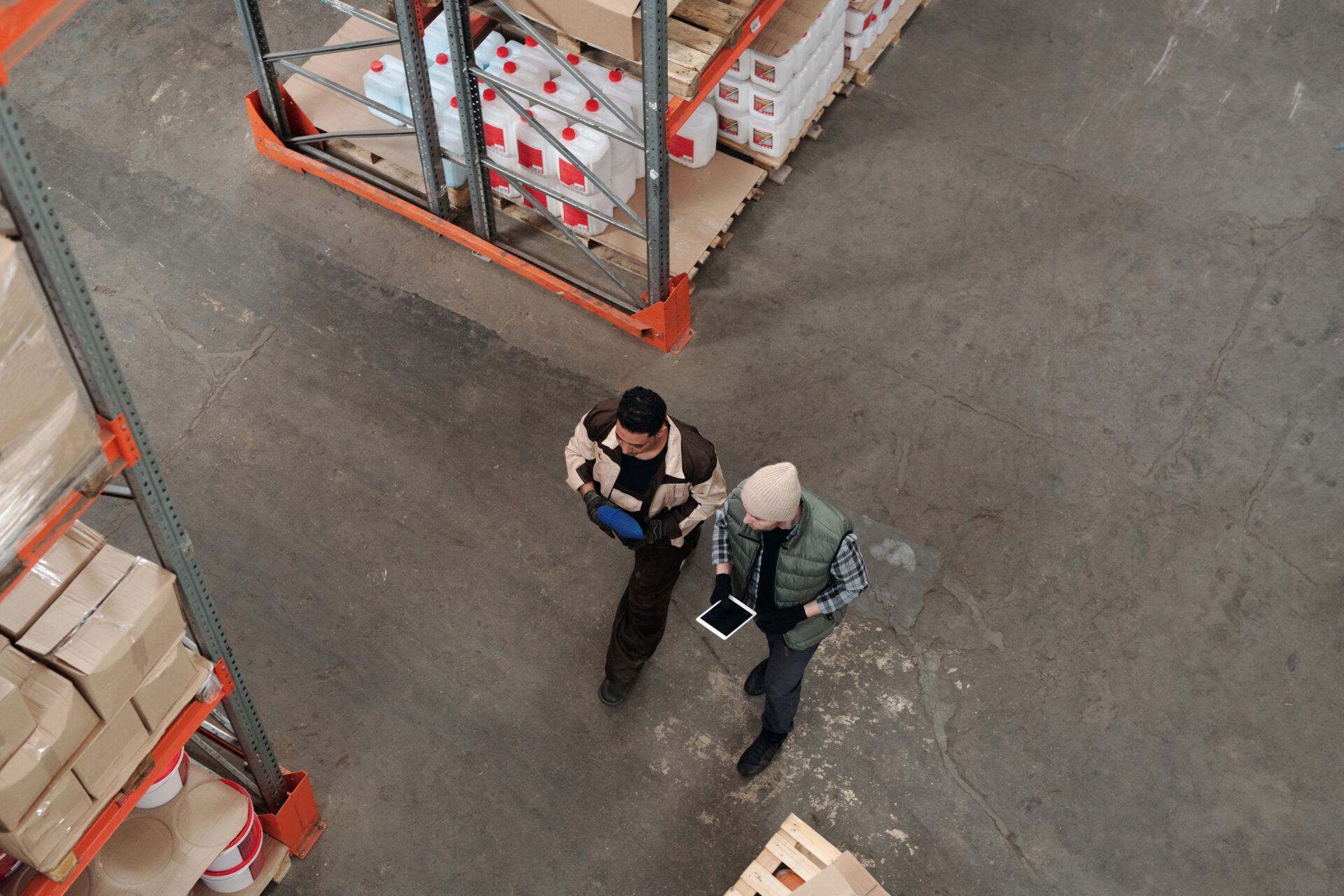
Coleman’s framework starts with operations, not technology. Grab a clipboard, a hard hat, and a stopwatch. Walk the floor. Watch how workers move through their shifts and identify the small repetitive inefficiencies that compound over time: how many times does a picker set down a scanner to move a box? How far do workers walk between picks? How long do shift changeovers actually take?
“Automate the constraint,” Coleman advises. Find the specific bottleneck that is costing the most time or creating the most errors. Apply technology to that problem first.
His other non-negotiable: involve the actual end users. Not just IT, not just operations management, but the workers who will use the technology daily. “Every time we involved the actual truck driver in the conversation, our success rate was 100%,” Coleman says.
When Brett Cooper asked Coleman to rate current AI readiness across warehouse functions, the most mature applications were:
Dynamic slotting and inventory placement.
High readiness. Zebra is running AI-powered digital twin models at its innovation center in Kenosha, Wisconsin, to optimize product placement in a warehouse based on velocity, seasonality, and pick patterns.
Labor planning and task orchestration.
High readiness. AI is generating coaching dialogue for supervisors and recommending task assignments based on workers’ skill levels and real-time workload.
Demand forecasting.
Medium readiness. Useful but dependent on data quality.
AI-enabled robotics.
Medium and escalating. Improving quickly but still expensive and integration-heavy.
Computer vision for quality and safety.
Low-medium and escalating. Camera-based compliance checking and safety monitoring are emerging but not yet widely deployed.
Predictive maintenance.
Low. The data infrastructure required to predict device and equipment failures is not in place at most facilities.
The through-line across all of these: your AI is only as good as your data. Coleman’s three-step readiness framework is to digitize first (capture clean, structured operational data), automate the bottlenecks (process automation on your highest-cost constraints). Then layer AI on top. Most companies are still working on step one.
Frequently Asked Questions
Zebra’s Vision Study estimated $6,000 per worker. A follow-up study conducted by Oxford Economics put the figure at $19,000 per warehouse worker, after fully accounting for recruiting, training, productivity ramp-up, and lost institutional knowledge. At facilities with annual turnover rates exceeding 100%, those costs can exceed total labor budgets for new hires within a single year.
It depends on the type. Process automation (scan tunnels, mobile computers, voice-directed picking, shared device management) delivers almost immediate payback by augmenting existing workflows without facility changes. Physical automation (autonomous robots, conveyor systems, automated storage) typically takes 7 to 10 years to deliver full ROI and has a higher total cost of ownership.
More relevant than ever. Modern voice picking has moved past the 90-day ramp-up periods and NATO phonetic alphabet requirements of 20 years ago. On-device AI chips now enable natural language processing directly on mobile devices, allowing workers to speak naturally without cloud dependencies or latency. For warehouses with inconsistent Wi-Fi or high worker turnover, voice with edge AI removes both connectivity risk and training burden.
Related Articles

Empowering Clients and Partners
Focusing on the Frontline Worker Experience
I have had the pleasure of working with the BlueFletch team for over a decade. I love their ability to move fast while still finding the right customer outcomes. In my experience, they always deliver a high quality solution, on time, and on budget. If you need SSO and security for Android devices, definitely take a look at them.

Jim s.
Director of Sales, Retail
We’ve worked with BlueFletch for several years and have NEVER been disappointed with their commitment and service. They are a very forward thinking organization always looking to add value to their partners. These are the guys we rely on whenever we have issues with Android login and security. I would HIGHLY recommend them for bridging any legacy software with Android for login & security.
Duane r.
Manager, Retail & Hospitality
The BlueFletch team is an awesome team to work with. They listen closely to customer challenges and problems, and help deliver the right solution, including outside the box thinking. Very professional, nimble, highly knowledgeable, and great expertise!
Paul b.
Senior Account Manager, Retail
I have partnered with BlueFletch’s SSO on several clients. Definitely a great solution for shared Android devices and best in class for enterprise customers. Very agile and customer first mentality.

Jonathan K.
Executive Account Manager, Global
If you want a state of the art SSO & Android Security solution for your enterprise with one of the best team’s in the business – choose BlueFletch! REALLY smart folks with extensive industry knowledge. Great partner – you can’t go wrong!

Gina L.
Vice President
I’ve utilized BlueFletch’s SSO solution across multiple projects. Their login integration and robust security features have significantly streamlined our authentication processes. I’m impressed with their expertise and support. Highly recommend!
Megan f.
Senior Partner
The BlueFletch team is an outstanding group of folks that not only understand the complexities and but also the positive business outcomes that mobile computing deliver. I highly recommend them to everyone looking to begin a mobile journey or improve the path they are already on!
greg h.
Vice President
We’ve worked with BlueFletch for years, I’ve always had such a wonderful experience working with them. It’s so nice having a partner you can trust, especially in this space. Can’t recommend them enough.
daniel r.
Founder
The team at BlueFletch is great to work with. I have partnered with them on some key enterprise projects. Great engineers and problem solvers!
andy c.
Enterprise Account Executive
Good company and partner to work with. They have been a great resource with a very good solution for SSO and login on employees’ Zebra Android devices. Very nimble for other software development and solutions as well.

marc f.
Senior Engineer
BlueFletch is a great partner to work with. Highly collaborative, great communication, and strong technical skills to deliver on projects.
trent f.
Senior Manager
BlueFletch does a fantastic job of helping find the right solution for customers. I would HIGHlY recommend them if you are looking for an Android SSO solution!
colin g.
Senior Manager, Retail & Hospitality

Validate the Fit
See BlueFletch Solve Your Device Challenges First-Hand, In Your Own Environment