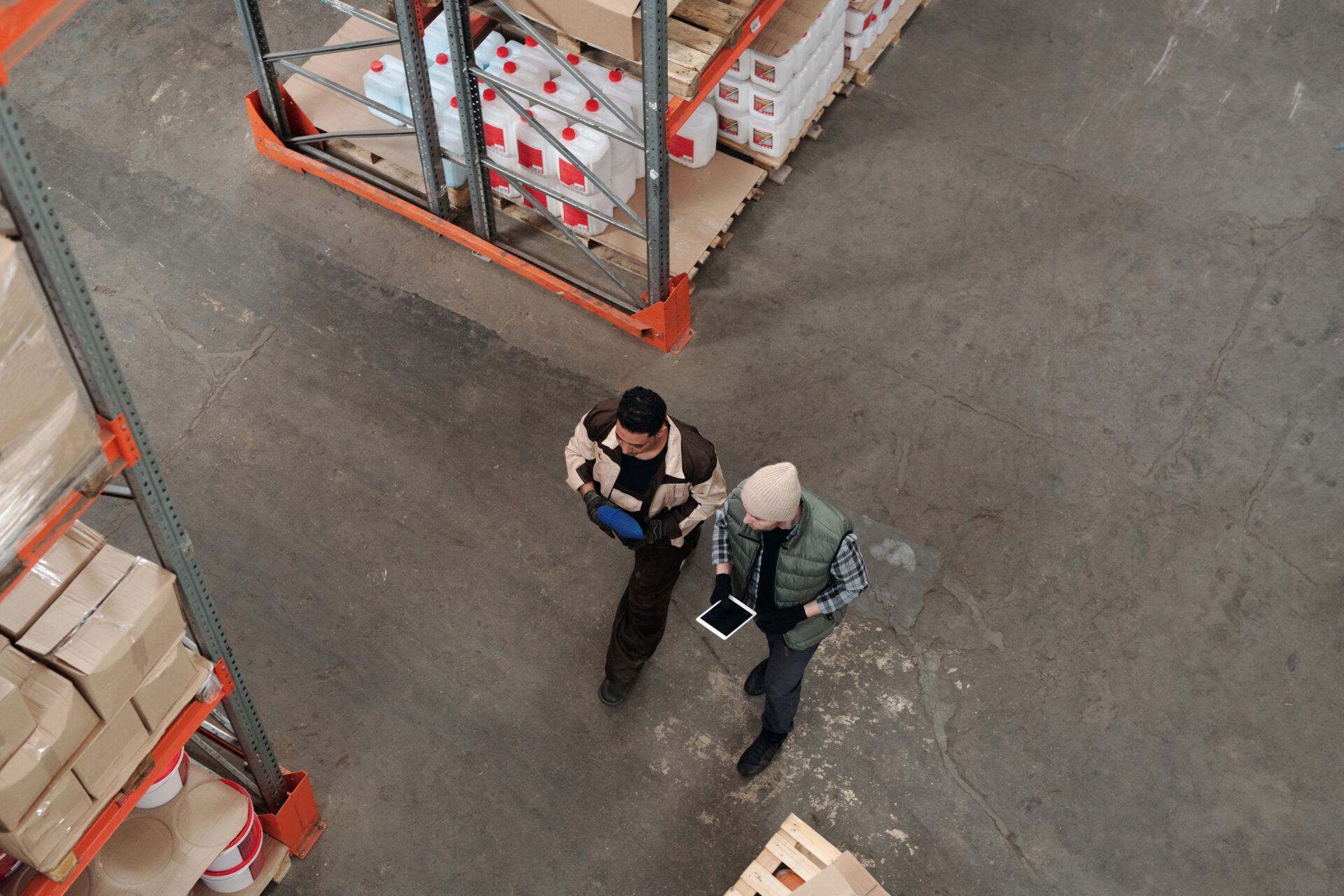
Warehouse technology modernization is rarely about chasing the newest device. It is about matching the tools on your floor to the workers who actually use them. On the Frontline Mobility Edge podcast, BlueFletch COO Brett Cooper sat down with Joe Leucht of Hardesty Technologies. Together they unpacked what is really changing in distribution centers and manufacturing plants, from the stubborn survival of green screens to the rise of AI-driven voice and virtual device lockers.
Watch the full episode for the complete discussion.
What Is Actually Replacing Green Screens in the Warehouse?
Walk into enough distribution centers, and you will still find green screen terminals running in 2026, nearly 25 years after they first became common. According to Leucht, that staying power is not an accident. The terminal emulation interface sits on top of an ERP or warehouse management system that is often stable, business-critical, and expensive to replace.
So the green screen is not disappearing because it stopped working. It is fading because the people using it have changed. “Green screens aren’t dead, but they’re no longer the endgame in terms of the interface for the end user,” Leucht said. Younger frontline workers grew up on touchscreens, so a terminal that looks like MS-DOS from the 1980s reads as broken the moment they pick it up.
That gap matters because warehouse turnover is already high. Hand a new hire archaic technology, and you give them one more reason to leave. Though the fix is not always a new system. Many terminal emulation vendors, including StayLinked, now offer browser-based experiences that give the floor a modern warehouse interface while the underlying WMS stays in place. As Leucht put it, the green screen “is dying because the workforce and the expectations around it have changed.”
Prefer to listen? Catch this episode on your favorite podcast app.
Why Are Warehouses Trading RF Guns for Rugged Tablets?
The pistol-grip RF gun defined warehouse scanning for more than a decade. Now tablets are moving in, though not the legacy Windows tablets of the past. Leucht sees rugged Android tablets showing up in two specific places on the warehouse floor.
Tablets as the floor manager’s dashboard
The first is management. Shift and floor managers increasingly carry a tablet as a mobile dashboard. They watch throughput, labor, and other KPIs in real time instead of walking back to a fixed workstation. For that use case, the larger screen is the whole point.
Tablets as the forklift’s new VMU
The second is the forklift. Bulky vehicle-mount units are giving way to tablets, and hardware makers are adapting to keep the interface drivers rely on. Leucht pointed to a new Honeywell mount that solves for this. A tablet snaps into a case with physical function keys along the bottom, effectively turning it into a modern VMU. “It’s taking a tablet and turning it into a VMU, which I think is a very smart play,” he said. Gloved drivers still need real keys for quick entries and function commands.
Why consumer tablets fail on the floor
One warning stood out. Consumer-grade tablets tend to lock onto a single access point, so they roam poorly as a worker moves through a large building. Purpose-built rugged tablets from vendors like Zebra, Honeywell, and Datalogic are engineered for that constant handoff between access points. They also stand up to the drops and dust the floor throws at them.
How Should You Handle Warehouse Device Loss and Accountability?
A big part of warehouse technology modernization is keeping track of the hardware. Shared devices disappear. Workers stash a favorite unit so they can grab it next shift, and it ends up lost, knocked over, or broken. Every one of those events carries a replacement and downtime cost, which is why a mobile accountability strategy has become a real line item.
The locker cabinet approach
Five years ago, Leucht would have pointed almost everyone toward a locking cabinet. Physical lockers still make sense in heavily industrial settings where devices need to be protected and out of the way. The tradeoff is cost, footprint, and bulk.
The virtual locker shift
The newer option is the virtual locker. These are familiar charging cradles with magnets and built-in locking technology, so a device stays docked until a worker completes a checkout. You get the accountability of a locker cabinet without the large, expensive enclosure.
Accountability, not just “find my device”
The deeper lesson is that visibility alone does not change behavior. “It’s not just about, can I find my device? It’s holding the staff accountable,” Leucht said. Paired with single sign-on in the warehouse, a checkout flow ties each device to a named worker. In the model Leucht described, a manager can get an alert when a device does not check back in, and workers note a device’s condition at return, so the next shift never grabs a cracked screen or a failing scanner. Because someone’s name is attached to the device, careless handling drops too.
Why Warehouse Devices Are Not Office Devices
The single most common mistake Leucht sees is IT teams treating a warehouse device like an office device. On the carpeted side of the building, a phone runs email, chat, and a browser in a calm, climate-controlled, nine-to-five environment. The warehouse is none of those things.
Instead, the floor brings drops, dust, forklifts, cold storage temperature swings, gloved hands, and RF coverage that shifts as inventory moves. Many buildings run 24/7. A consumer iPhone or iPad that feels perfectly capable at a desk cannot hold up on the floor. The stakes are different too. “If an office laptop goes down, someone’s annoyed and frustrated. If a warehouse device goes down, processes stop,” Leucht said, and stopped processes mean missed deliveries and lost money.
Frequently Asked Questions
Yes. Many warehouses still run green screen terminal emulation because the underlying ERP or warehouse management system remains stable and business critical. The interface is being modernized through browser-based apps and touchscreens, largely because younger frontline workers expect a touch experience rather than a text terminal.
Increasingly, yes. Rugged Android tablets are taking over two roles: mobile dashboards for floor and shift managers, and forklift-mounted units that replace bulky vehicle-mount hardware. New mounts add physical function keys so gloved drivers keep the fast key entry that RF guns and older VMUs provided.
A virtual locker is a charging cradle with built-in magnets and locking technology that keeps a device docked until a worker checks it out. It delivers the accountability of a traditional locker cabinet, tying each device to a named user, without the cost and footprint of a large physical enclosure.
Related Articles


Empowering Clients and Partners
Focusing on the Frontline Worker Experience
I have had the pleasure of working with the BlueFletch team for over a decade. I love their ability to move fast while still finding the right customer outcomes. In my experience, they always deliver a high quality solution, on time, and on budget. If you need SSO and security for Android devices, definitely take a look at them.

Jim s.
Director of Sales, Retail
We’ve worked with BlueFletch for several years and have NEVER been disappointed with their commitment and service. They are a very forward thinking organization always looking to add value to their partners. These are the guys we rely on whenever we have issues with Android login and security. I would HIGHLY recommend them for bridging any legacy software with Android for login & security.
Duane r.
Manager, Retail & Hospitality
The BlueFletch team is an awesome team to work with. They listen closely to customer challenges and problems, and help deliver the right solution, including outside the box thinking. Very professional, nimble, highly knowledgeable, and great expertise!
Paul b.
Senior Account Manager, Retail
I have partnered with BlueFletch’s SSO on several clients. Definitely a great solution for shared Android devices and best in class for enterprise customers. Very agile and customer first mentality.

Jonathan K.
Executive Account Manager, Global
If you want a state of the art SSO & Android Security solution for your enterprise with one of the best team’s in the business – choose BlueFletch! REALLY smart folks with extensive industry knowledge. Great partner – you can’t go wrong!

Gina L.
Vice President
I’ve utilized BlueFletch’s SSO solution across multiple projects. Their login integration and robust security features have significantly streamlined our authentication processes. I’m impressed with their expertise and support. Highly recommend!
Megan f.
Senior Partner
The BlueFletch team is an outstanding group of folks that not only understand the complexities and but also the positive business outcomes that mobile computing deliver. I highly recommend them to everyone looking to begin a mobile journey or improve the path they are already on!
greg h.
Vice President
We’ve worked with BlueFletch for years, I’ve always had such a wonderful experience working with them. It’s so nice having a partner you can trust, especially in this space. Can’t recommend them enough.
daniel r.
Founder
The team at BlueFletch is great to work with. I have partnered with them on some key enterprise projects. Great engineers and problem solvers!
andy c.
Enterprise Account Executive
Good company and partner to work with. They have been a great resource with a very good solution for SSO and login on employees’ Zebra Android devices. Very nimble for other software development and solutions as well.

marc f.
Senior Engineer
BlueFletch is a great partner to work with. Highly collaborative, great communication, and strong technical skills to deliver on projects.
trent f.
Senior Manager
BlueFletch does a fantastic job of helping find the right solution for customers. I would HIGHlY recommend them if you are looking for an Android SSO solution!
colin g.
Senior Manager, Retail & Hospitality

Validate the Fit
See BlueFletch Solve Your Device Challenges First-Hand, In Your Own Environment