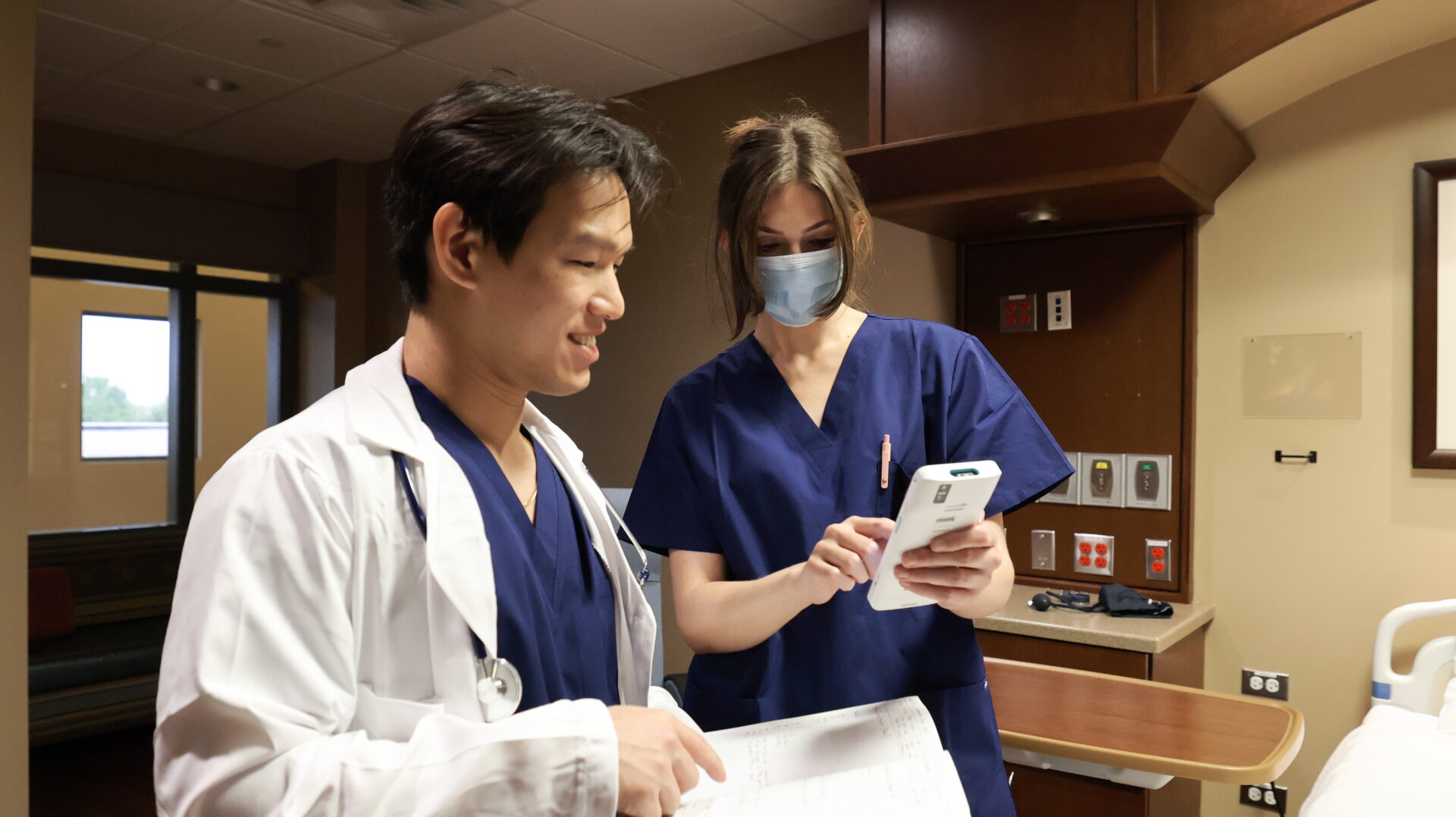
Your nurses are tech-savvy, career-committed professionals who overwhelmingly believe mobile devices improve patient care. A BlueFletch-commissioned survey of several hundred nurses across U.S. hospitals, clinics, and home health settings confirms that. Over 60% of respondents had more than six years of nursing experience. More than 90% rated themselves intermediate or expert with technology. The question for hospital IT leaders is not whether nurses want mobile technology in hospitals. It is what nurses actually want from that technology, and whether your organization’s devices and systems are keeping up.
Watch the full episode for the complete discussion.
What Are the Biggest Mobile Device Problems Nurses Face in Hospitals?
The survey asked nurses to identify their top frustrations with mobile devices. Five issues stood out, and the number-one complaint directly relates to the IT director’s budget and security responsibilities.
1. Login and security make mobile technology hard to use (27%)
More than a quarter of nurses said authentication friction is their single biggest device complaint. In the survey, 52% of nurses reported still using username and password to log in, compared to just 25% using badge tap. When you factor in that 80% of nurses log in three or more times per day. 30% log in more than ten times; the cumulative time cost becomes significant. At 30 to 40 seconds per manual login, a nurse logging in 10 times per shift loses 5 to 7 minutes per shift just on authentication.
2. Lack of technical support (26%)
IT departments in hospitals juggle infrastructure, EHR application management, cybersecurity, and dozens of other priorities simultaneously. Once shared devices are deployed, IT teams tend to move to the next project. But nurses on the floor cannot wait 10 minutes for a callback from the help desk when they have patients to see.
3. Software frequently malfunctions or crashes (24%)
This can stem from hospital network bandwidth not keeping pace with the number of devices on each floor. From applications that were not tested thoroughly enough before deployment to clinical users.
4. Battery does not last a full shift (18%)
The battery issue points to aging device fleets. One nurse’s freeform comment captured it plainly: “We have iPhone 8s. We need to replace them.” A nine-year-old device will not hold a charge through a twelve-hour shift.
5. Concerns with patient data security (18%)
The data security concern reflects the reality that 45% of nurses reported using personal devices on the job. This creates shadow IT exposure through unmanaged apps, such as WhatsApp, for clinical coordination.
Login Fatigue is the #1 Tech Issue Reported by Nurses in 2026
275 clinicians reveal the gaps between satisfaction scores and reality. How much is this costing your hospital?
Why Do Nurses Still Prefer Mobile Devices Despite These Frustrations?
Despite every complaint listed above, the survey data on mobile device value was nearly unanimous. Over 98% of nurses responded that mobile devices increase quality of care, increase their efficiency, and reduce patient errors. Those were three separate questions, and all came back above 98%.
When asked about device preference, 71% of nurses chose mobile devices and tablets. Just 3% preferred workstations on wheels or fixed computers. As Lee DeHihns noted during the discussion, “Even with all those complaints, they’re better than a workstation on wheels.“
The implication for IT leaders evaluating clinical mobility programs is clear: nurses are not asking whether they want mobile devices. They are asking for devices that work reliably, authenticate quickly, and stay charged through a full shift. Solving the login, support, and battery issues identified in the survey would not only improve satisfaction scores. It would directly improve the patient outcomes that clinicians already attribute to having mobile technology at the point of care.
The EHR landscape adds another dimension to device strategy. Among surveyed nurses, Epic led at 40%, followed by MetaTech at 33%, Athena Health at 24%. Oracle Cerner at 14%. The MetaTech and Athena Health numbers surprised both Cooper and DeHihns. May reflect the survey’s broader respondent base (roughly 60% worked in hospitals, with the rest in clinics, outpatient settings, and home health) rather than a shift in large hospital EHR adoption.
Prefer to listen? Catch this episode on your favorite podcast app.
What Technology Improvements Do Nurses Want Most From Their Hospitals?
The answer that surprised us the most was the number one technology request: better integration between different systems, ranked by 41% of nurses. Not AI, not new hardware, but the ability to move between labs, monitoring systems, communication tools, and the EHR without manually transferring data between disconnected applications.
Number two was advanced AI diagnostic tools at 39%. Nurses are not hesitant about AI. 95% of respondents expressed positive sentiment toward AI in clinical care. More than 26% reported already using AI in their daily practice. DeHihns highlighted one emerging use case: AI-powered wound care measurement, in which a mobile device’s camera measures the size and depth of a wound and integrates that data directly into the EHR.
The budget reality behind these requests is sobering. Brett Cooper referenced feedback from a hospital CIO who framed the challenge this way: a clinical SSO and device management program might cost $400,000 to $500,000 per year, but it competes for board approval against a $2 million MRI machine. The MRI generates quantifiable insurance reimbursement codes. The login program saves nursing time that is harder to translate into the revenue cycle metrics that hospital boards track quarter over quarter.
With 45% of U.S. hospitals operating at a loss, every IT investment decision carries weight. But the survey data makes a compelling case: nurses overwhelmingly want mobile technology, and they are willing to work around significant frustrations to use it. The specific improvements they are asking for (faster login, better system integration, reliable devices) are exactly the kind of operational investments that reduce help desk burden, decrease shadow IT risk, minimize turnover, and give nurses more time with patients.
Frequently Asked Questions
According to BlueFletch’s survey of several hundred nurses across U.S. hospitals, clinics, and home health settings, 45% of nurses reported using a personal device on the job. This creates shadow IT exposure, as clinical conversations and coordination may occur via unmanaged consumer apps like WhatsApp rather than IT-approved communication platforms.
The survey found that nearly 80% of nurses log in to devices more than three times per day, and over 30% log in more than ten times daily. With 52% of nurses still using a username and password (rather than badge tap or biometric login), each manual login takes 30 to 40 seconds, meaning nurses who log in 10 or more times per shift can lose 5 to 7 minutes daily on authentication alone.
Overwhelmingly yes. 95% of surveyed nurses expressed positive sentiment toward AI in healthcare, and more than 26% reported already using AI in their daily practice. The most-requested technology improvements included advanced AI diagnostic tools (39% of nurses), with specific clinical applications such as AI-powered wound measurement already used in some facilities.
Related Articles



Empowering Clients and Partners
Focusing on the Frontline Worker Experience
I have had the pleasure of working with the BlueFletch team for over a decade. I love their ability to move fast while still finding the right customer outcomes. In my experience, they always deliver a high quality solution, on time, and on budget. If you need SSO and security for Android devices, definitely take a look at them.

Jim s.
Director of Sales, Retail
We’ve worked with BlueFletch for several years and have NEVER been disappointed with their commitment and service. They are a very forward thinking organization always looking to add value to their partners. These are the guys we rely on whenever we have issues with Android login and security. I would HIGHLY recommend them for bridging any legacy software with Android for login & security.
Duane r.
Manager, Retail & Hospitality
The BlueFletch team is an awesome team to work with. They listen closely to customer challenges and problems, and help deliver the right solution, including outside the box thinking. Very professional, nimble, highly knowledgeable, and great expertise!
Paul b.
Senior Account Manager, Retail
I have partnered with BlueFletch’s SSO on several clients. Definitely a great solution for shared Android devices and best in class for enterprise customers. Very agile and customer first mentality.

Jonathan K.
Executive Account Manager, Global
If you want a state of the art SSO & Android Security solution for your enterprise with one of the best team’s in the business – choose BlueFletch! REALLY smart folks with extensive industry knowledge. Great partner – you can’t go wrong!

Gina L.
Vice President
I’ve utilized BlueFletch’s SSO solution across multiple projects. Their login integration and robust security features have significantly streamlined our authentication processes. I’m impressed with their expertise and support. Highly recommend!
Megan f.
Senior Partner
The BlueFletch team is an outstanding group of folks that not only understand the complexities and but also the positive business outcomes that mobile computing deliver. I highly recommend them to everyone looking to begin a mobile journey or improve the path they are already on!
greg h.
Vice President
We’ve worked with BlueFletch for years, I’ve always had such a wonderful experience working with them. It’s so nice having a partner you can trust, especially in this space. Can’t recommend them enough.
daniel r.
Founder
The team at BlueFletch is great to work with. I have partnered with them on some key enterprise projects. Great engineers and problem solvers!
andy c.
Enterprise Account Executive
Good company and partner to work with. They have been a great resource with a very good solution for SSO and login on employees’ Zebra Android devices. Very nimble for other software development and solutions as well.

marc f.
Senior Engineer
BlueFletch is a great partner to work with. Highly collaborative, great communication, and strong technical skills to deliver on projects.
trent f.
Senior Manager
BlueFletch does a fantastic job of helping find the right solution for customers. I would HIGHlY recommend them if you are looking for an Android SSO solution!
colin g.
Senior Manager, Retail & Hospitality

Validate the Fit
See BlueFletch Solve Your Device Challenges First-Hand, In Your Own Environment