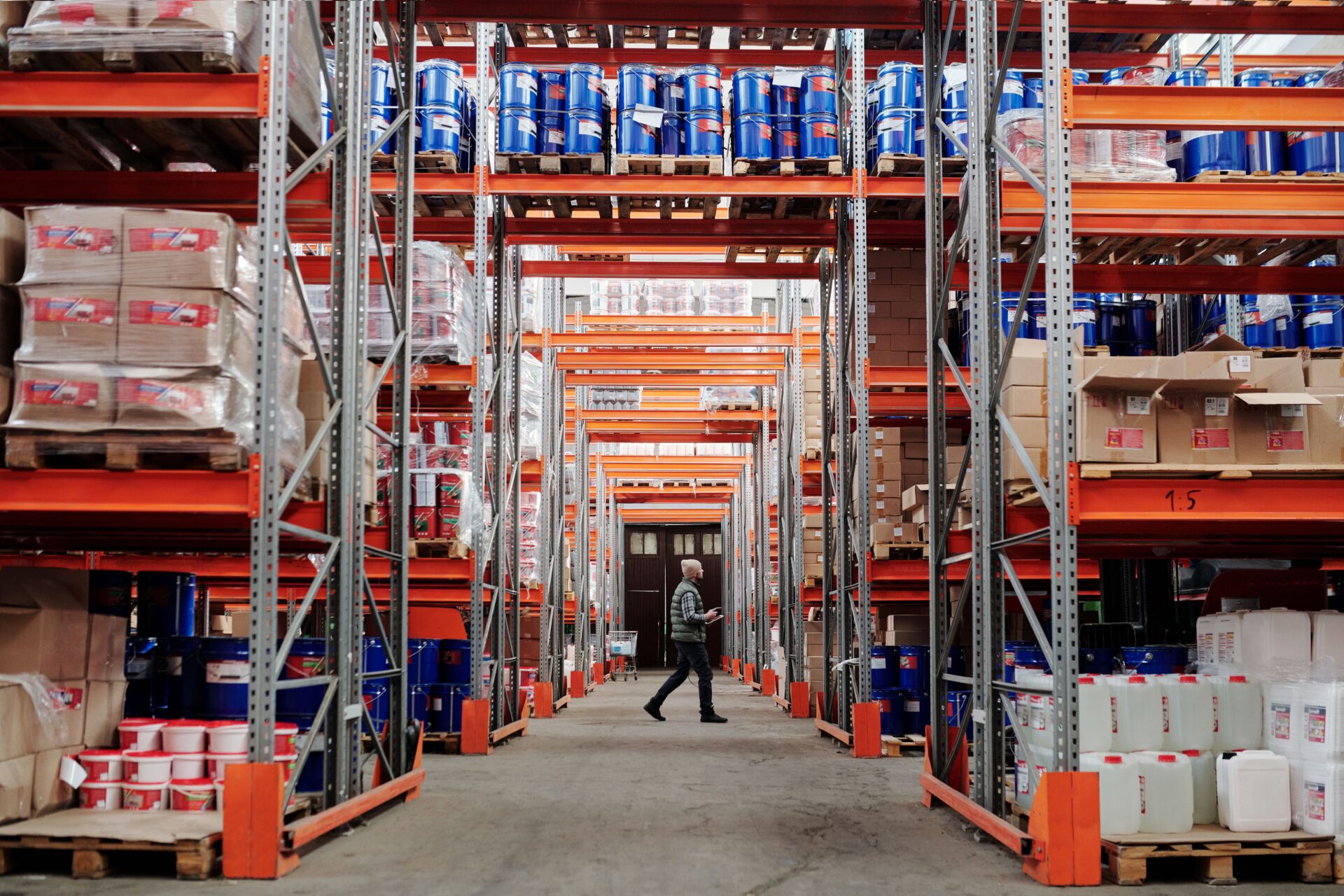
MODEX 2026 occupied 4 million square feet at the Georgia World Congress Center in Atlanta, with 6,000 exhibitors showcasing everything from robotic forklifts to LIDAR-based biometric scanners. Brett Cooper and Richard Makerson from BlueFletch spent four days walking the floor and talking to warehouse managers to understand what vendors were selling versus what buyers were actually looking for. Their top eight takeaways reveal the biggest warehouse automation trends for 2026, cutting through the show-floor noise.
Watch the full episode for the complete discussion.
Why Are Warehouse Vendors Selling Systems Instead of Individual Products?
The biggest shift Cooper and Makerson noticed was that the warehouse conversation has moved from products to systems. In previous years, attendees went to MODEX looking for specific things: a new forklift, a WMS vendor, a safety equipment supplier. In 2026, the winning vendors were not just selling tools. They were selling interoperability and orchestration.
Cooper saw this firsthand at a robotic forklift booth. The autonomous forklift had GPS antennas and cameras, but the real pitch was integration. “We’ll just tie into your WMS system, and you’ll have your warehouse pre-mapped. It’ll go to the WMS and fill it,” the vendor explained. No custom mapping, no standalone setup. The forklift plugged into the existing warehouse management system and started working.
This has practical implications for IT teams evaluating new technology. If a product cannot integrate with your existing WMS, ERP, and overall scanning infrastructure, it will create more friction than it eliminates. Every warehouse has a different level of technology maturity. What works for a new greenfield facility will not work for a facility that has been running the same processes for a decade. There is no one-size-fits-all, which is why interoperability matters more than any single feature.
Prefer to listen? Catch this episode on your favorite podcast app.
How Is AI Being Used in Warehouses Beyond the Hype?
AI was everywhere at MODEX, but not the way it was two years ago. Makerson observed that AI has become embedded infrastructure, not a marketing buzzword. Very few vendors had “AI” plastered across their booth materials. Instead, it was quietly built into workflows, helping warehouse operators access information faster and reducing the need for manual analysis. Driving the kind of incremental efficiency gains that compound across thousands of daily transactions.
The most visible application was vision technology. Camera systems have gotten good enough (and the processing behind them fast enough) to handle tasks that used to require dedicated hardware. Cooper spoke with a warehouse manager who is removing RFID infrastructure and replacing it with cameras. “All of our boxes have labels,” the manager said. “The camera technology can do a lot of the stuff that RFID actually can’t do.” If an RFID tag falls off or is never attached, the item is invisible. A camera reads the label regardless.
Drones scanning inventory on high shelves, autonomous forklifts navigating aisles with cameras and LIDAR, and inspection systems that verify safety compliance without a human walking the floor were all on display at MODEX. One exhibitor had a LIDAR sensor with millimeter-level accuracy for biometric identification, a concept BlueFletch’s team immediately related to shared device authentication in warehouse environments.
Frontline mobile devices are following the same pattern. Zebra, Honeywell, Datalogic, and Keyence were all showing smaller, smarter, more hands-free devices with on-device AI capabilities. Wearable scanners that take voice commands and run local inference for task guidance represent the direction: the device becomes smarter without requiring the worker to change their workflow.
What Should Warehouse Buyers Prioritize Over Flashy Trade Show Demos?
Makerson’s number-one takeaway: buyers are paying more attention to stubborn operational pain than to flashy demos. Six years ago at MODEX, robots were juggling and bouncing ping pong balls. In 2026, they were unloading trucks and demonstrating real operational workflows. The shift reflects what warehouse buyers actually care about, which is return on friction.
“If I invest in this product. These are truly investments because they are massive and complicated; it’s not creating another headache for me,” Makerson said. “This thing is great, but when it jams or when it doesn’t work, I can’t run my business.”
Cooper’s number-one takeaway reinforced the same point from the buyer side. He spoke with a tenured warehouse manager who had been running operations for years. The manager’s conclusion after walking the MODEX floor: there is more technology available than he could ever deploy. But he has limited capital. His approach was to pick one problem, prove its ROI, solve it, then move on to the next.
For IT leaders evaluating warehouse technology, that translates to three practical rules:
1. Start with your most expensive operational pain.
Whether it is shift changeover delays, device accountability gaps. Inventory counting accuracy, the problem with the clearest cost should get investment first.
2. Test interoperability before features.
A tool that integrates cleanly with your WMS and existing device fleet is worth more than a tool with superior features that requires a six-month integration project.
3. Protect existing throughput.
If you have a running warehouse and try to change something, you can quickly break a process. Any new technology must perform at least as well as the current setup before it earns a wider rollout.
Frequently Asked Questions
Not necessarily. Camera-based tracking is becoming a viable alternative for warehouses where items already have labels or barcodes. Camera systems can read labels that RFID might miss (e.g., missing or damaged tags) and provide visual verification that RFID cannot. RFID still has advantages in environments where line-of-sight is not possible or where items lack printed labels, but the accuracy and cost improvements in camera and computer vision technology are making it a competitive option for many operations.
Not yet. While companies like Tesla with Optimus are making progress, most warehouse operations do not need robots with arms and legs. Robotic forklifts, autonomous pallet movers, and task-specific machines that integrate with existing WMS infrastructure solve more immediate problems. Most warehouses were built for humans, and retrofitting them for humanoid robots introduces complexity that simpler automation avoids. The practical near-term path is to automate existing equipment, not to replace workers with humanoid machines.
Start with the operational problem, not the technology. Identify the workflow with the highest cost or friction, quantify the annual cost of that problem, and evaluate tools specifically for that use case. Run POCs with your actual WMS and device infrastructure. Prioritize interoperability over features, because a product that cannot integrate with your existing systems will create more headaches than it solves, no matter how impressive the demo.
Related Articles


Empowering Clients and Partners
Focusing on the Frontline Worker Experience
I have had the pleasure of working with the BlueFletch team for over a decade. I love their ability to move fast while still finding the right customer outcomes. In my experience, they always deliver a high quality solution, on time, and on budget. If you need SSO and security for Android devices, definitely take a look at them.

Jim s.
Director of Sales, Retail
We’ve worked with BlueFletch for several years and have NEVER been disappointed with their commitment and service. They are a very forward thinking organization always looking to add value to their partners. These are the guys we rely on whenever we have issues with Android login and security. I would HIGHLY recommend them for bridging any legacy software with Android for login & security.
Duane r.
Manager, Retail & Hospitality
The BlueFletch team is an awesome team to work with. They listen closely to customer challenges and problems, and help deliver the right solution, including outside the box thinking. Very professional, nimble, highly knowledgeable, and great expertise!
Paul b.
Senior Account Manager, Retail
I have partnered with BlueFletch’s SSO on several clients. Definitely a great solution for shared Android devices and best in class for enterprise customers. Very agile and customer first mentality.

Jonathan K.
Executive Account Manager, Global
If you want a state of the art SSO & Android Security solution for your enterprise with one of the best team’s in the business – choose BlueFletch! REALLY smart folks with extensive industry knowledge. Great partner – you can’t go wrong!

Gina L.
Vice President
I’ve utilized BlueFletch’s SSO solution across multiple projects. Their login integration and robust security features have significantly streamlined our authentication processes. I’m impressed with their expertise and support. Highly recommend!
Megan f.
Senior Partner
The BlueFletch team is an outstanding group of folks that not only understand the complexities and but also the positive business outcomes that mobile computing deliver. I highly recommend them to everyone looking to begin a mobile journey or improve the path they are already on!
greg h.
Vice President
We’ve worked with BlueFletch for years, I’ve always had such a wonderful experience working with them. It’s so nice having a partner you can trust, especially in this space. Can’t recommend them enough.
daniel r.
Founder
The team at BlueFletch is great to work with. I have partnered with them on some key enterprise projects. Great engineers and problem solvers!
andy c.
Enterprise Account Executive
Good company and partner to work with. They have been a great resource with a very good solution for SSO and login on employees’ Zebra Android devices. Very nimble for other software development and solutions as well.

marc f.
Senior Engineer
BlueFletch is a great partner to work with. Highly collaborative, great communication, and strong technical skills to deliver on projects.
trent f.
Senior Manager
BlueFletch does a fantastic job of helping find the right solution for customers. I would HIGHlY recommend them if you are looking for an Android SSO solution!
colin g.
Senior Manager, Retail & Hospitality

Validate the Fit
See BlueFletch Solve Your Device Challenges First-Hand, In Your Own Environment